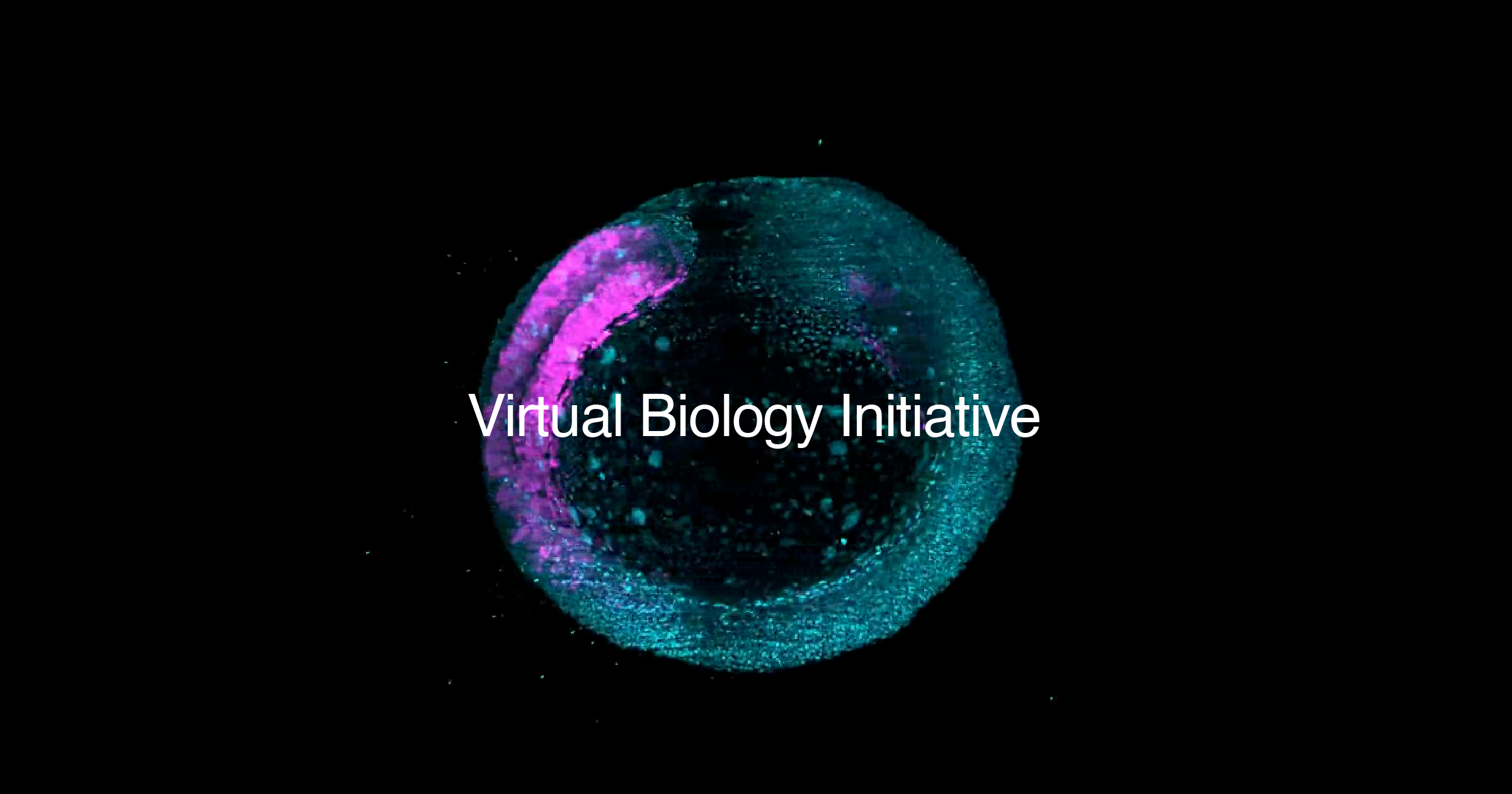
Biohub, the research organization backed by the Chan Zuckerberg Initiative, said it is expanding the Virtual Biology Initiative, an international effort meant to generate and make accessible the data needed for predictive AI models of biology. In announcement posts, Biohub said the partnership includes the U.S. Department of Energy and the National Institutes of Health, while Alex Rives said founding partners include Isomorphic, Google DeepMind, and Meta.
In its announcement, Biohub said the organizations involved are making a $1.8 billion investment in funding, data, computation and new measurement technology. Biohub described that as the largest coordinated commitment to map the biology of the cell to power the development of digital models of biology.
Rives said the partnership's goal is to generate the data needed to build an accurate AI model of the cell. He also described the longer-term ambition as a "universal predictive model of the cell" that could allow biologists to perform experiments digitally.
What the project is aiming to build
As described in the announcement posts, the focus is on building the underlying data and research infrastructure for future models. Rives called it a "large scale coordinated effort to map cellular biology to power the development of digital models of life".
That means the near-term announcement is about assembling data, computation, measurement technology, and participating institutions around the same scientific effort. The stated longer-term goal, according to Rives, is a model that could help biologists run some experiments digitally before deciding which ones to pursue in the lab.
Who Biohub and Rives said is involved
The supplied materials describe Biohub, DOE, and NIH as part of the announced partnership. Separately, Rives said Isomorphic, Google DeepMind, and Meta are joining as founding partners in the Virtual Biology Initiative.
Rives' post also named additional institutions and consortia taking part in the broader project, including the Allen Institute, Broad Institute, Gladstone Institutes, the Human Cell Atlas, the Human Protein Atlas, the Wellcome Sanger Institute, and NVIDIA.
A social post linking to Axios quoted Rives as saying, "We're at the beginning of a new scientific paradigm with AI," and described him there as Biohub's head of science.
Biohub's own announcement framed the expansion as an international effort to generate and make accessible the data enabling predictive AI models of biology, while Rives said the work is intended to support an accurate model of the cell and, eventually, a broader predictive model scientists could use digitally.