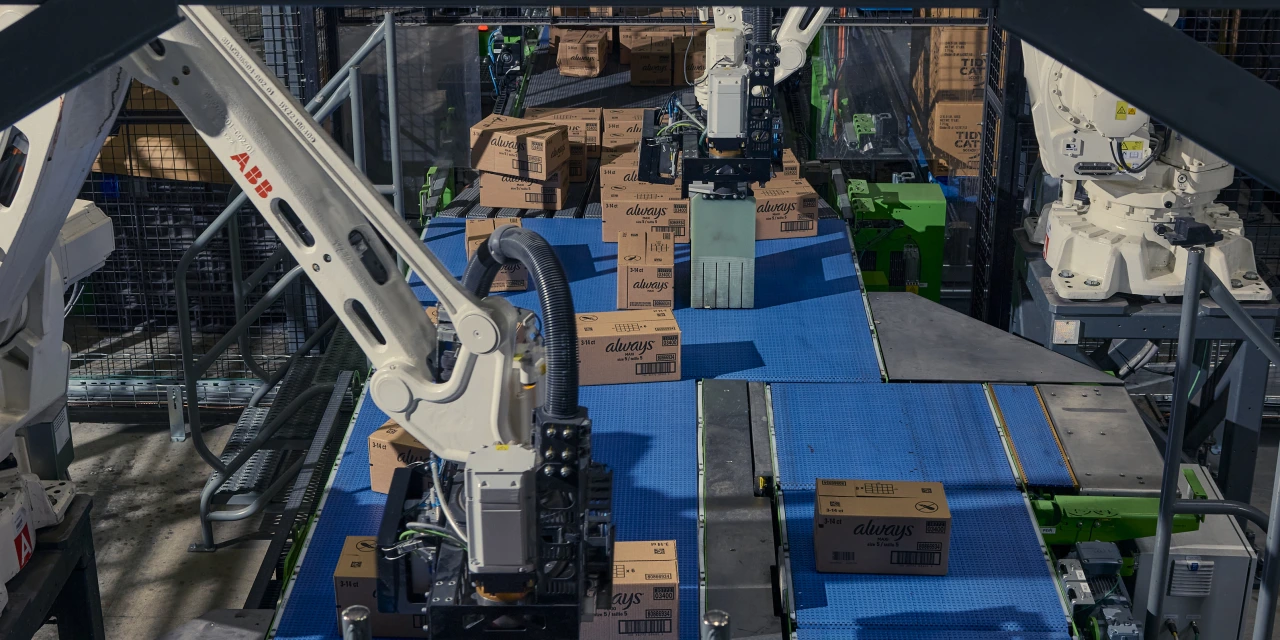
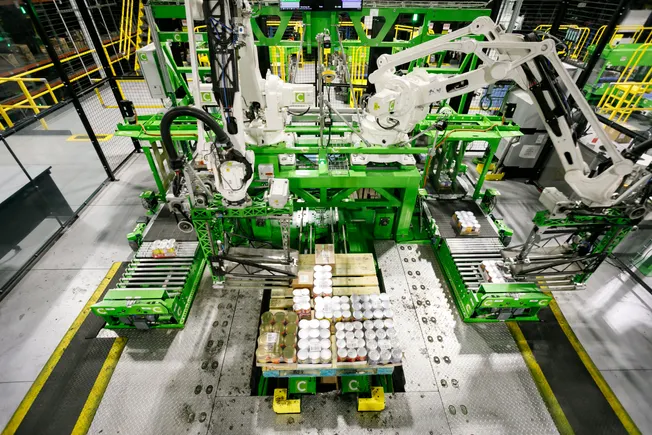
The Wall Street Journal reports that Walmart's automation transition is under way at most of its roughly 200 U.S. supply-chain buildings. The decade-long, multibillion-dollar effort is trying to change how goods move through a network that still relies on more than 140,000 warehouse workers.
Where the systems stumble
About 80% of Walmart's automation projects are retrofits, the Journal reports, and the company is re-engineering many warehouses built in the 1980s and 1990s without taking them out of service. Even "breakpack," the task of removing individual items from shipping boxes, has been difficult to automate. Walmart's long-used boxes are too large for some systems, shuttle robots break down or need maintenance, and oversized products such as large bags of dog food still require manual handling.
Walmart owns a 12.6% stake in Symbotic, whose systems are planned for all 42 distribution centers that handle nonperishable goods by around 2030. The partners struggled to meet throughput goals in earlier deployments. A Symbotic spokesperson told the Journal that fewer than 10% of its robots were being repaired at any moment last year, a figure that had fallen to about 5% in recent months.
Progress, at a price
At Walmart's Brooksville, Florida, test warehouse, about 80% of inventory now moves through automation. That is progress at one site, not a network-wide result. The transition can also raise operating costs: A person familiar with the matter told the Journal that peak-month power bills at automated grocery facilities can reach $800,000 or more, compared with about $250,000 when operations were more manual.
Walmart expects spending on store remodeling and supply-chain automation to peak this year and next. Company executives say automation should eventually mean fewer manual warehouse jobs and more technical roles, while high turnover should allow the shift without mass layoffs. Workers will still be needed for tasks including unloading trailers and maintaining the systems.