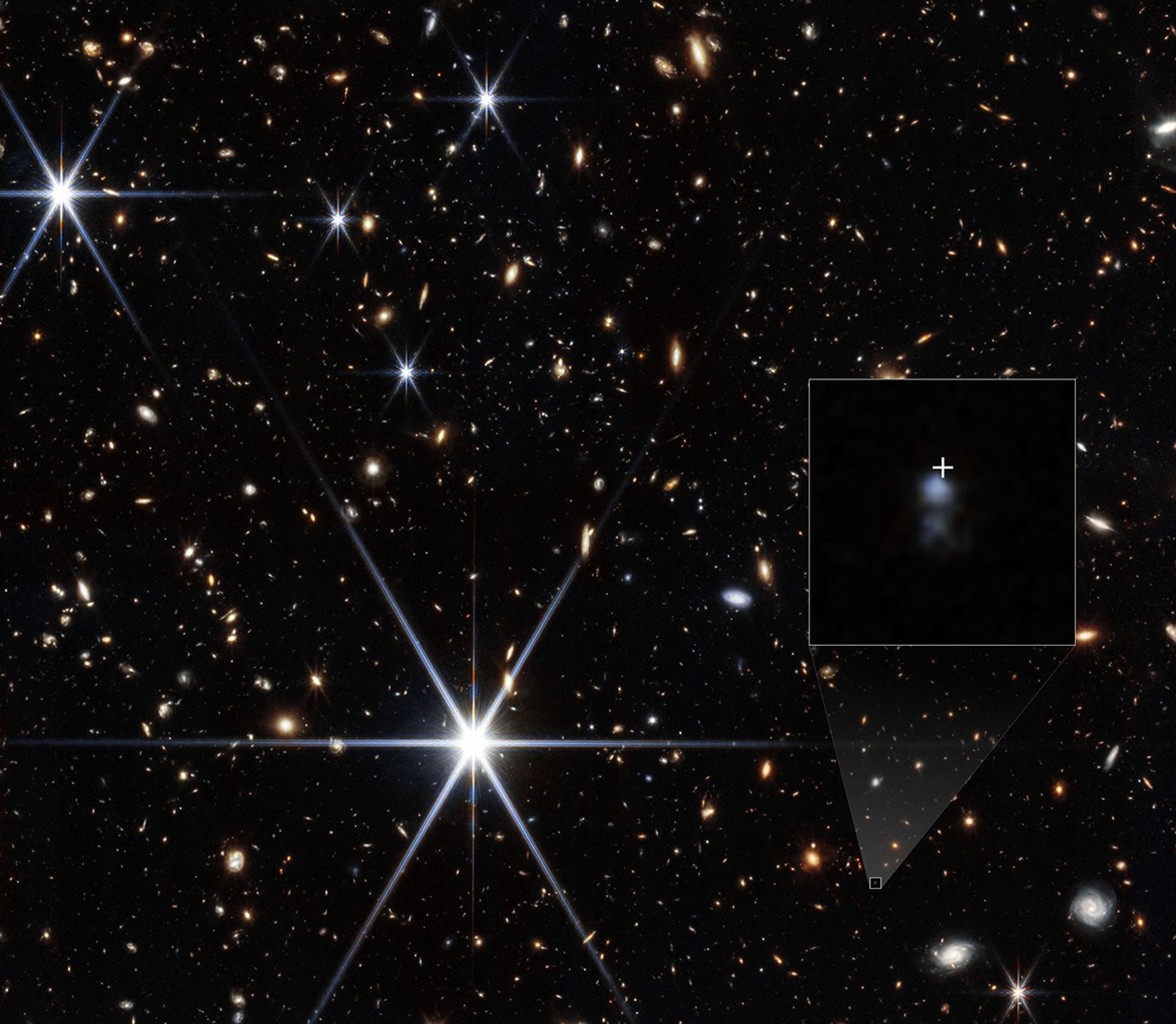
NASA says the James Webb Space Telescope has identified the host galaxy of the most distant fast radio burst seen to date, giving astronomers a better handle on just how far the signal traveled and another data point in the long-running effort to explain what causes these brief, powerful flashes.
Fast radio bursts, or FRBs, are millisecond-long flashes of radio emission from the distant universe. NASA notes they were first discovered in 2007, and says their origins are still hard to pin down. That is why finding the galaxy they came from matters: it ties a fleeting radio signal to a specific place in the cosmos.
A NASA Webb social post said Webb found the host galaxy for the record-setting burst. A Space.com post described it as the most distant FRB ever found and said the new measurement more than doubled the previous record.
NASA-linked social copy shared by an account citing the agency's release said the burst was designated FRB 20240304B and was first spotted on March 4, 2024, by the MeerKAT radio telescope in South Africa. That post also said ground-based observatories could not see anything at the flash's location, prompting astronomers to use Webb to look deeper in infrared light.
Why this matters
The immediate significance is less about one dramatic explosion than about better context for a famously confusing kind of signal. NASA's release says Webb measured the distance to the farthest fast radio burst, and that the result may help suggest its origin. The supplied packet supports that broad takeaway, but not a more specific explanation for the exact mechanism behind the burst.
So the cautious version is also the useful one: Webb appears to have helped connect a record-distance FRB to its host galaxy, and that gives astronomers a stronger basis for studying where these events happen and what kinds of environments produce them.
status: drafted
Assignment: storyId dcdefc73-402c-4260-b37f-ab7ecf2e519d; brief hash 2e3b54e420930be0b866e7089eeac89f9c6904a35adadc31638b480a32854180
Claim support:
- NASA says Webb found the host galaxy of the most distant FRB seen to date: sources 1b2f2861-e187-4c57-b619-8a65f435951a, b8beda93-300e-4ee3-be88-a4ef7be19f21
- Space.com says it more than doubled the previous record: source a256149e-0f06-40e3-bad5-697a95267fbb
- FRB 20240304B was first spotted March 4, 2024, by MeerKAT in South Africa: source a73b75a2-e9e9-4612-bfc0-f20f942152f3
- Packet supports suggesting origin, but not detailed mechanism: source b8beda93-300e-4ee3-be88-a4ef7be19f21